Calarin • review build
MagSafe-backed recorder, not a puck.
This is the review package for Calarin Rev‑A: real schematic status, the corrected battery decision, the proposed MagSafe geometry, and the actual KiCad visuals. Short version: the schematic is clean, the product direction is now a flat slab on the back of the phone, and 302540 is the right v1 battery target.
ERC verified: 0 errors / 0 warnings
Primary battery: 302540
Fallback: 402030 bring-up only
Outer envelope
62 × 96 × ~10 mm
Phone anchor
iPhone 15 Pro body
Product shape
Vertical MagSafe slab
State of board
Reviewable now
What this should look like
This is the intended v1 direction: a wallet-ish recorder centered on the MagSafe zone, flatter and taller rather than chunky and square.
302540
Concept view only, not precision CAD. The important bit is the shape philosophy: spend footprint before thickness.
Review call in one screen
- KiCad project is fixed and reproducibly clean.
- Old battery logic was based on an upside-down size-code assumption.
- We are no longer designing around a fake 3 mm box.
- The right product is a MagSafe-backed vertical slab.
- 302540 is the best balanced v1 battery.
- 402030 is only a schedule hedge for bring-up.
Primary target
302540
~3 × 25 × 40 mm
~3 × 25 × 40 mm
Stretch target
302560
more runtime, more sourcing friction
more runtime, more sourcing friction
Fallback
402030
bring-up only
bring-up only
Live truth boundary
Board done
mechanical iteration still real
mechanical iteration still real
Geometry and stack
Product renders
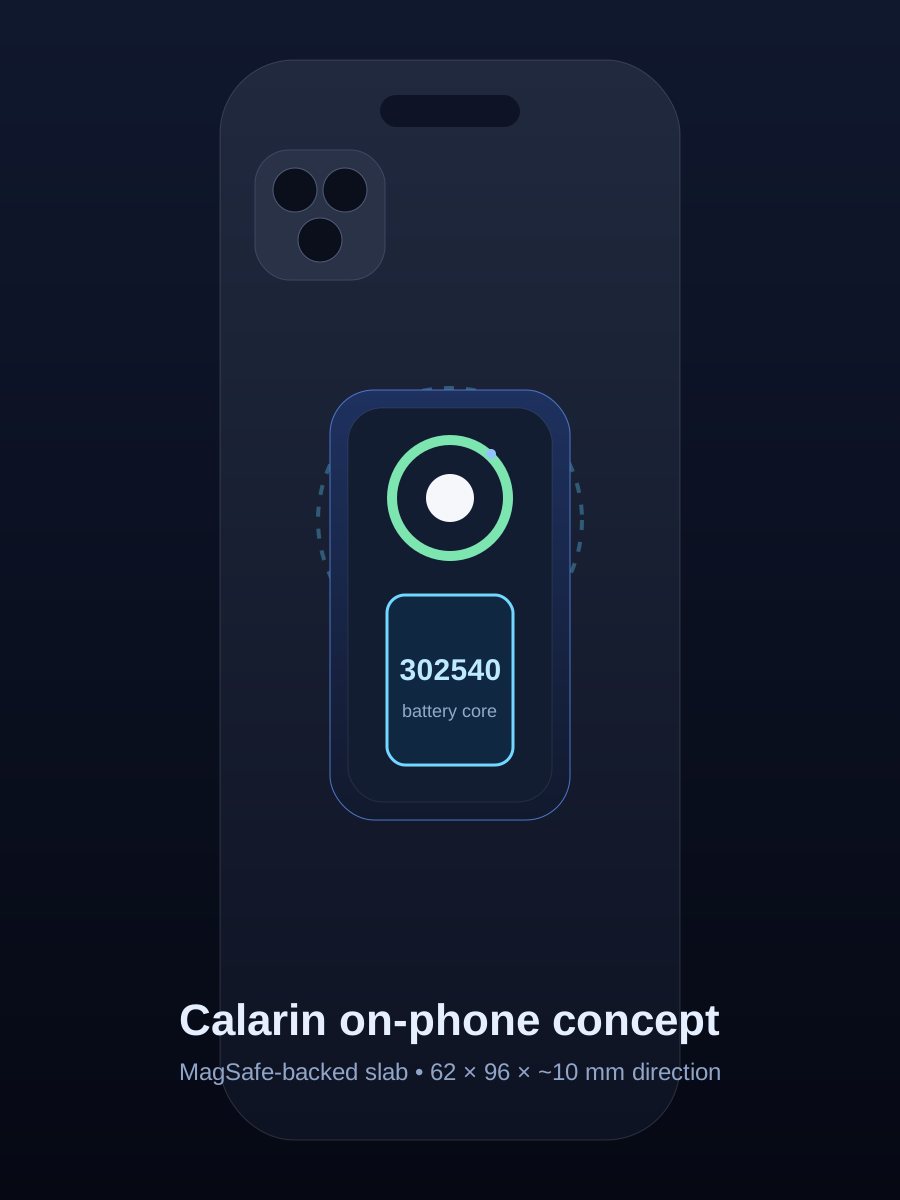
On-phone mounted concept
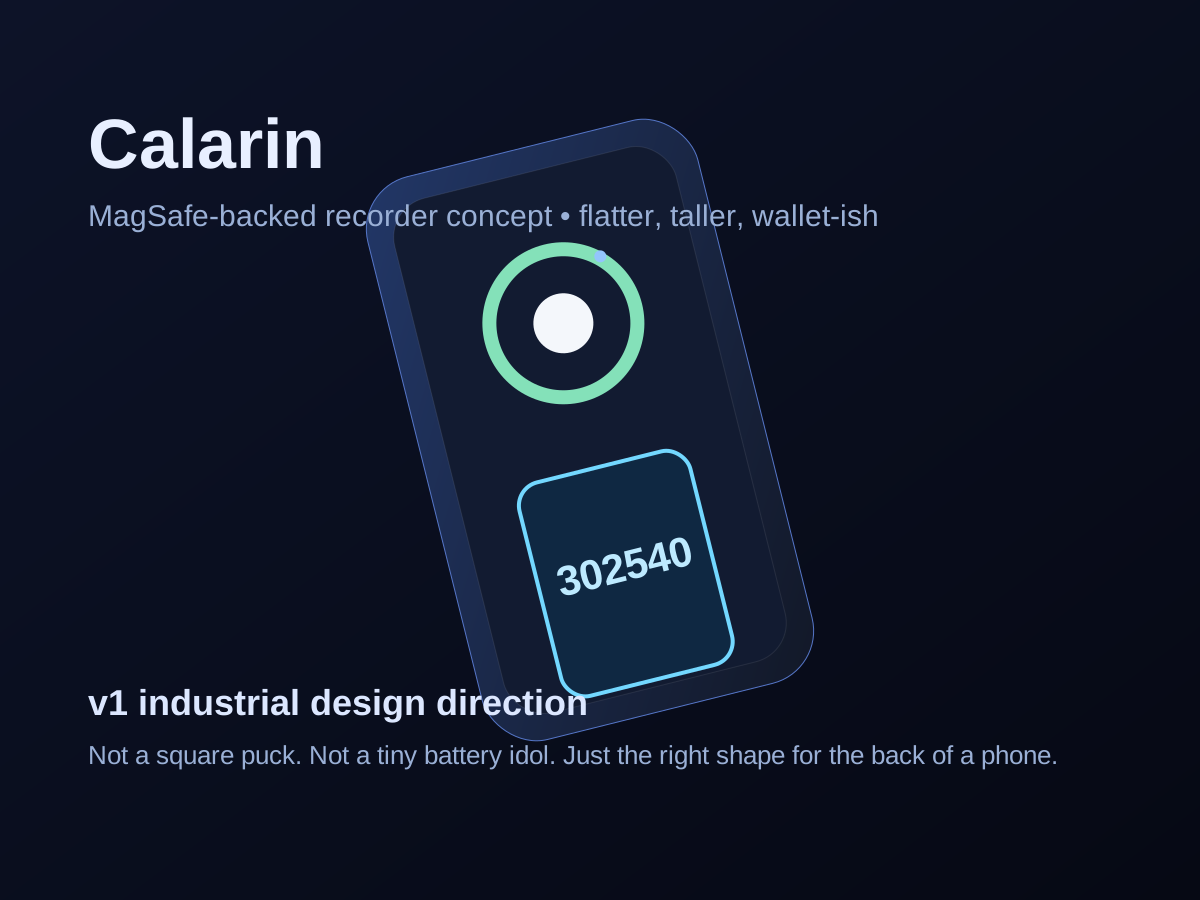
Standalone product hero
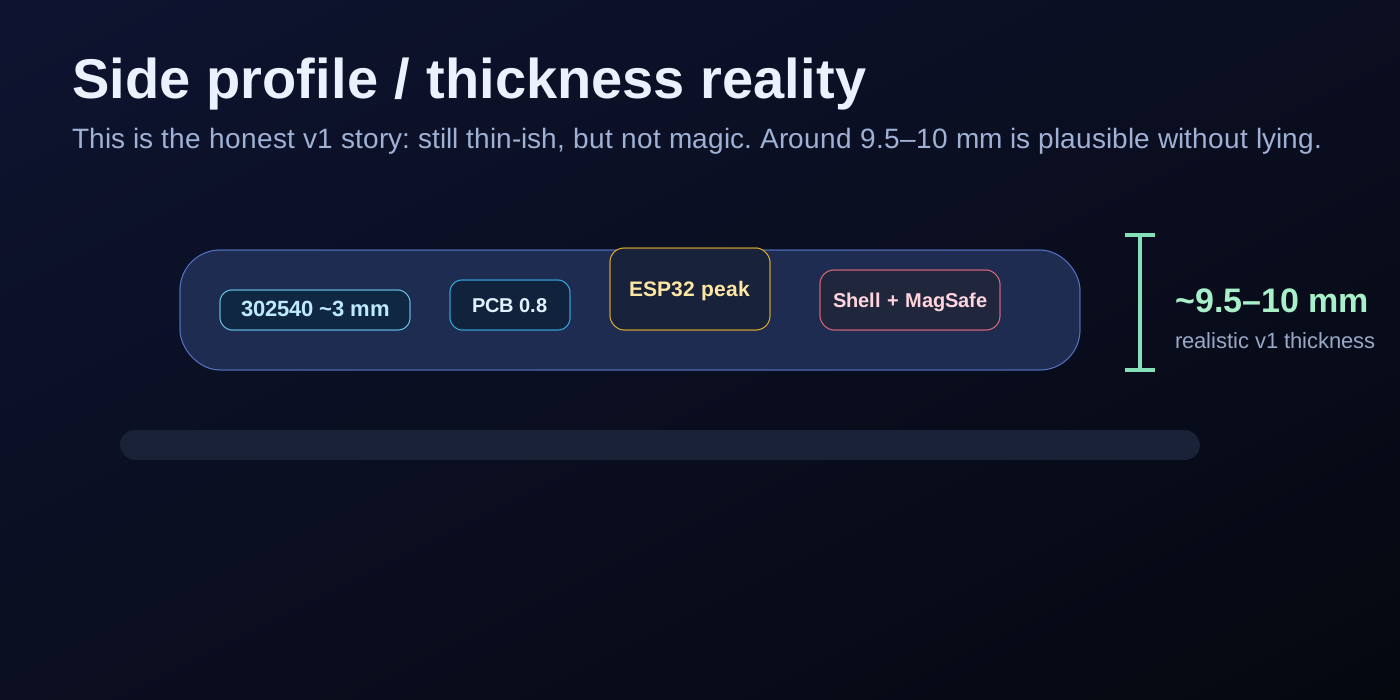
Side profile / thickness reality
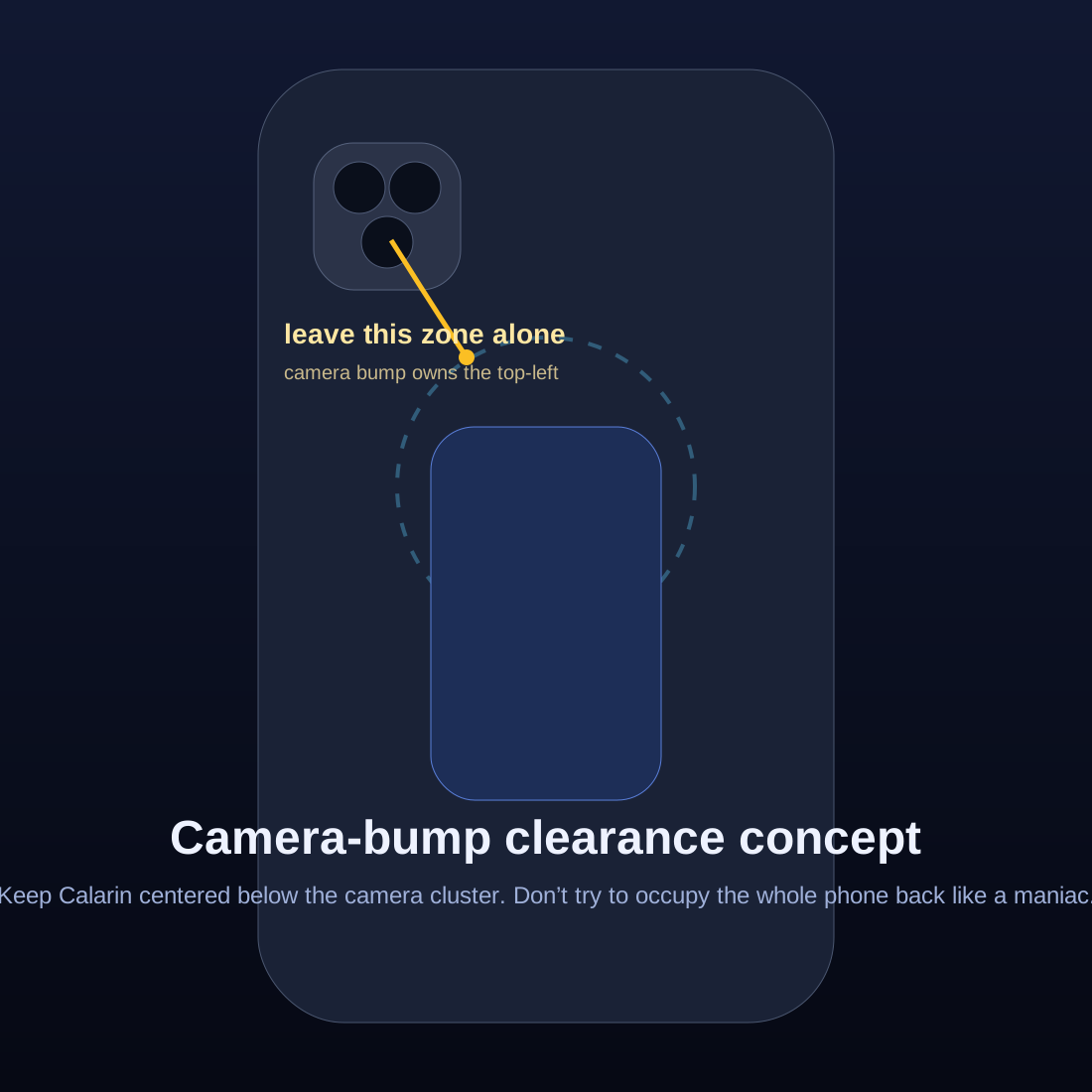
Camera-bump clearance concept
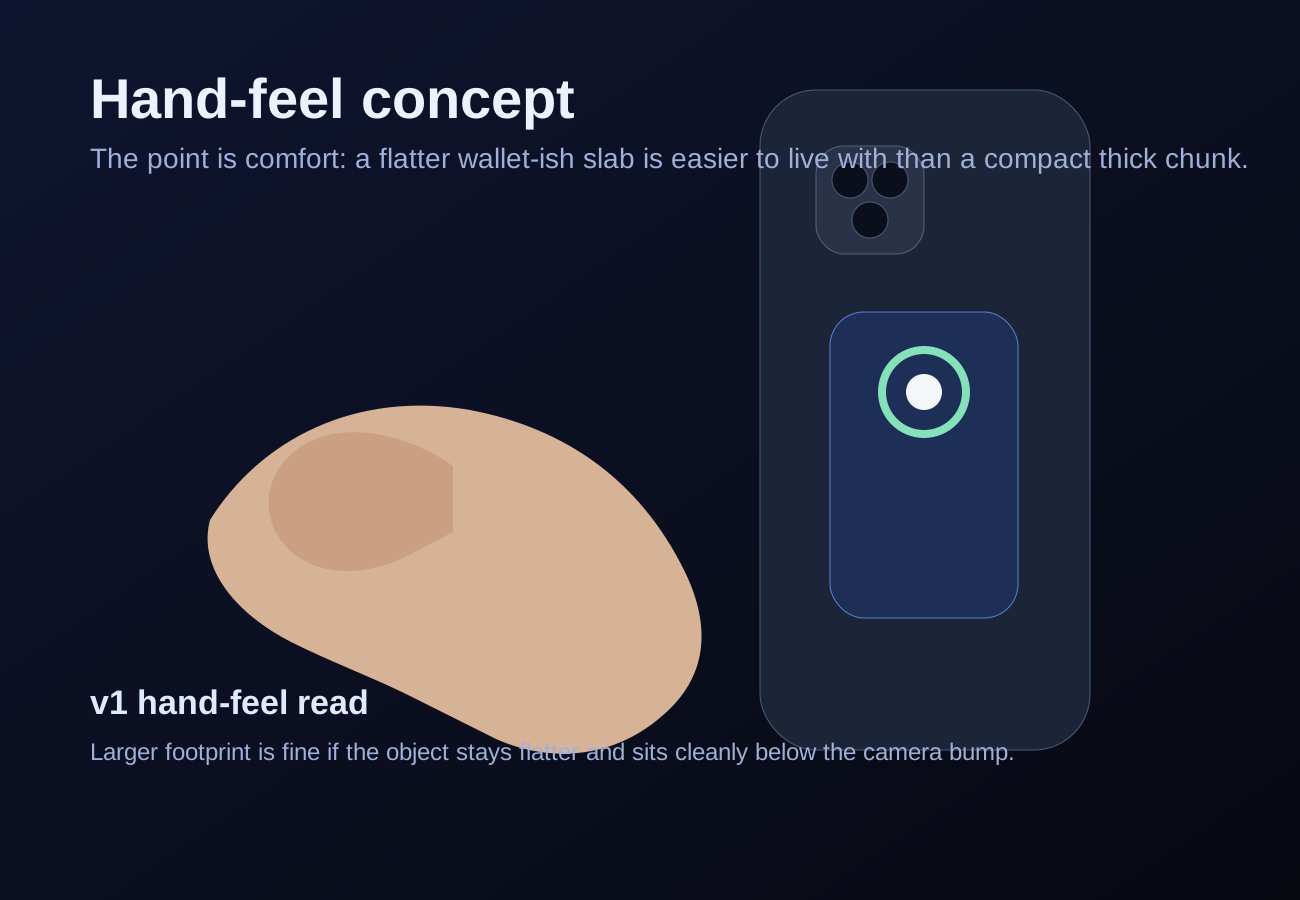
Hand-feel concept
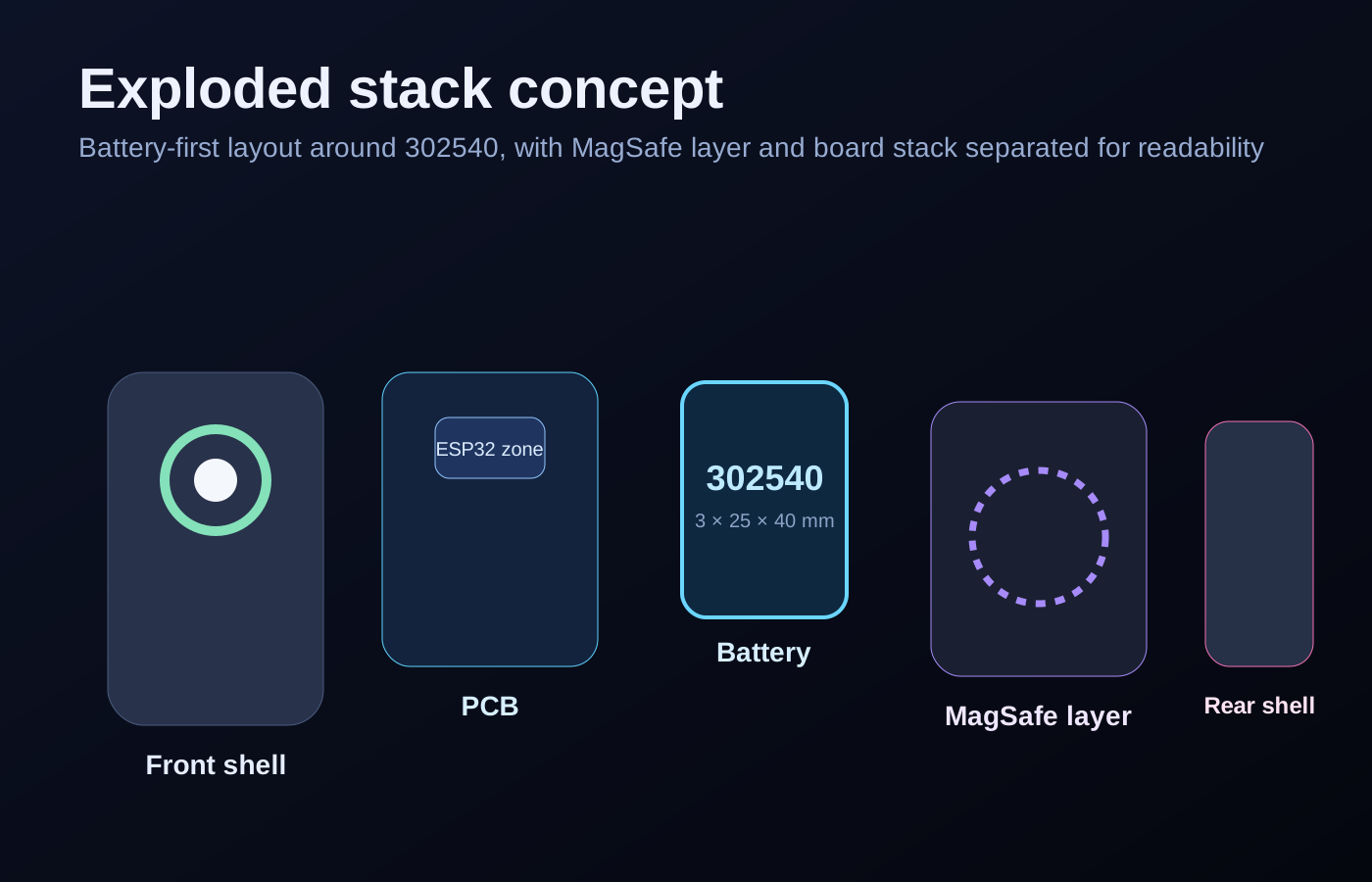
Exploded stack concept
These are cleaner concept renders built from the current geometry decision. Still concept art, but finally useful concept art.
Prototype buy / build move
- Order 302540 now as the real product-direction battery.
- Order 402030 too if we want a no-drama bring-up hedge.
- Do not let battery sourcing hold the board-side parts hostage.
- The board/electrical set is already de-risked enough to buy.
Primary buy
Ecocell 302540
40 × 25 × 3 mm • JST-PH • protected
40 × 25 × 3 mm • JST-PH • protected
Retail backup
99Tech 302540
same class, smaller stock signal
same class, smaller stock signal
Bring-up hedge
PMD 402030
easy fallback if 302540 slows us down
easy fallback if 302540 slows us down
Vendor/custom
LiPol LP302540
5pc MOQ • custom connector/wires path
5pc MOQ • custom connector/wires path
What to order now
- 2–4x Ecocell 302540 packs
- 2–4x PMD Way 402030 packs
- ESP32-S3-WROOM-1 class module
- MSM261DGT003 microphone
- W25Q128JVSIQ flash
- IP5306-I2C power path parts
- ME6210A33M3G LDO
- USB-C connector + LED + passives already represented in the schematic
Schematics and KiCad visuals
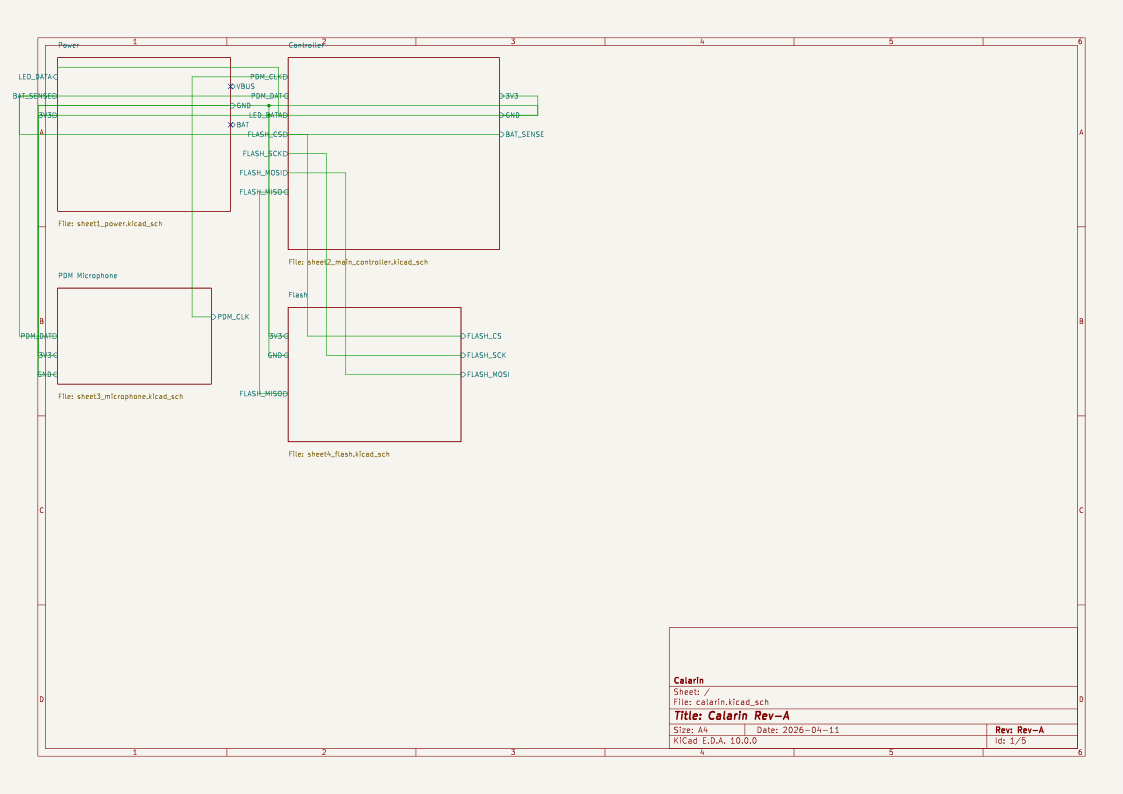
Top-level schematic
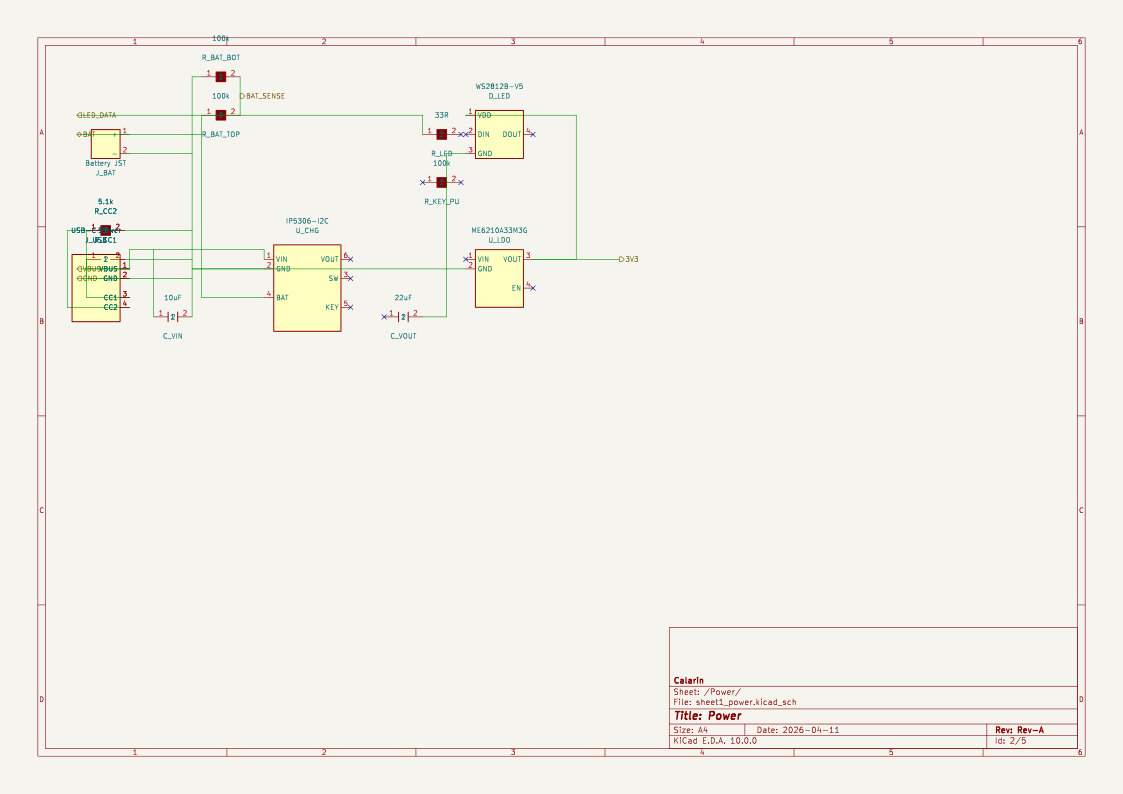
Power sheet
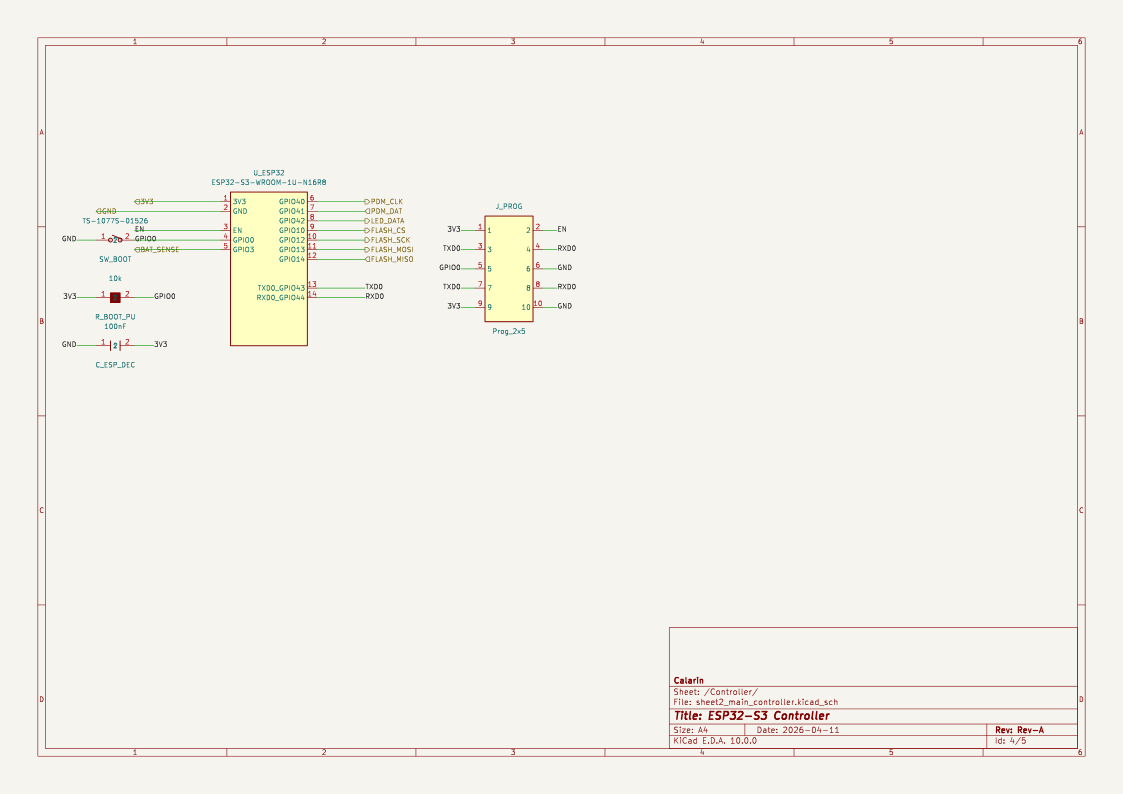
Controller sheet
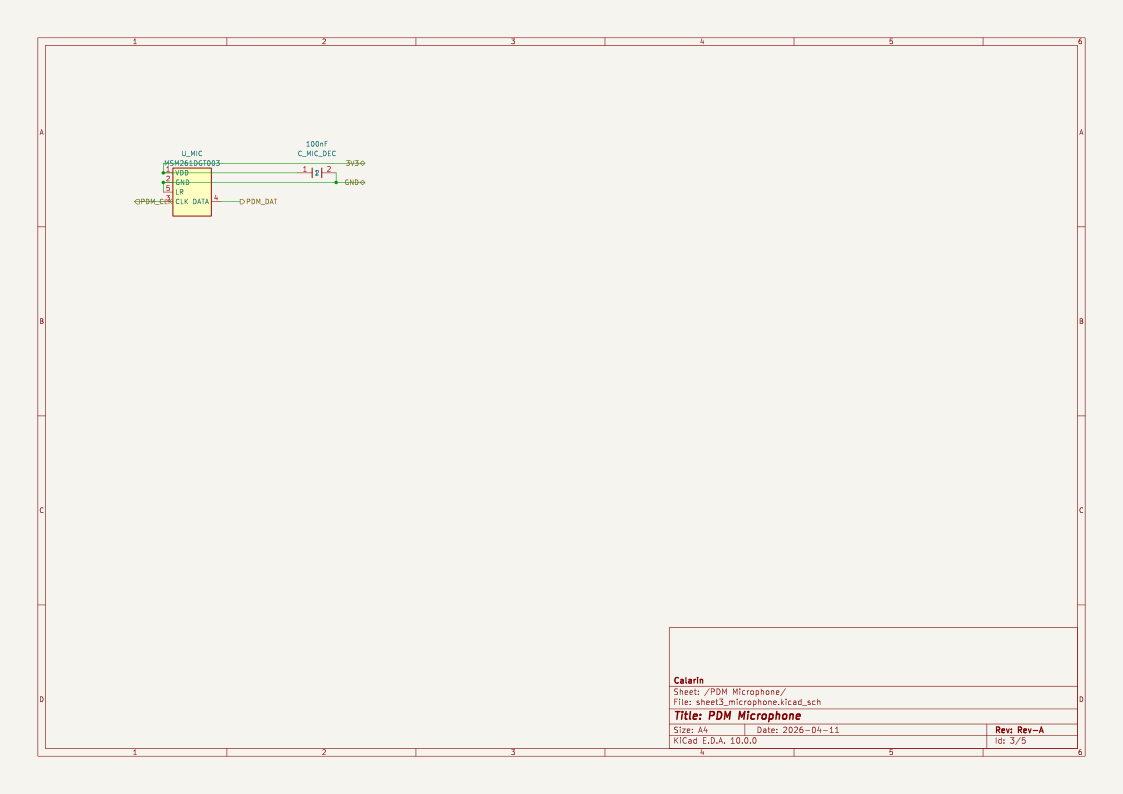
PDM microphone sheet
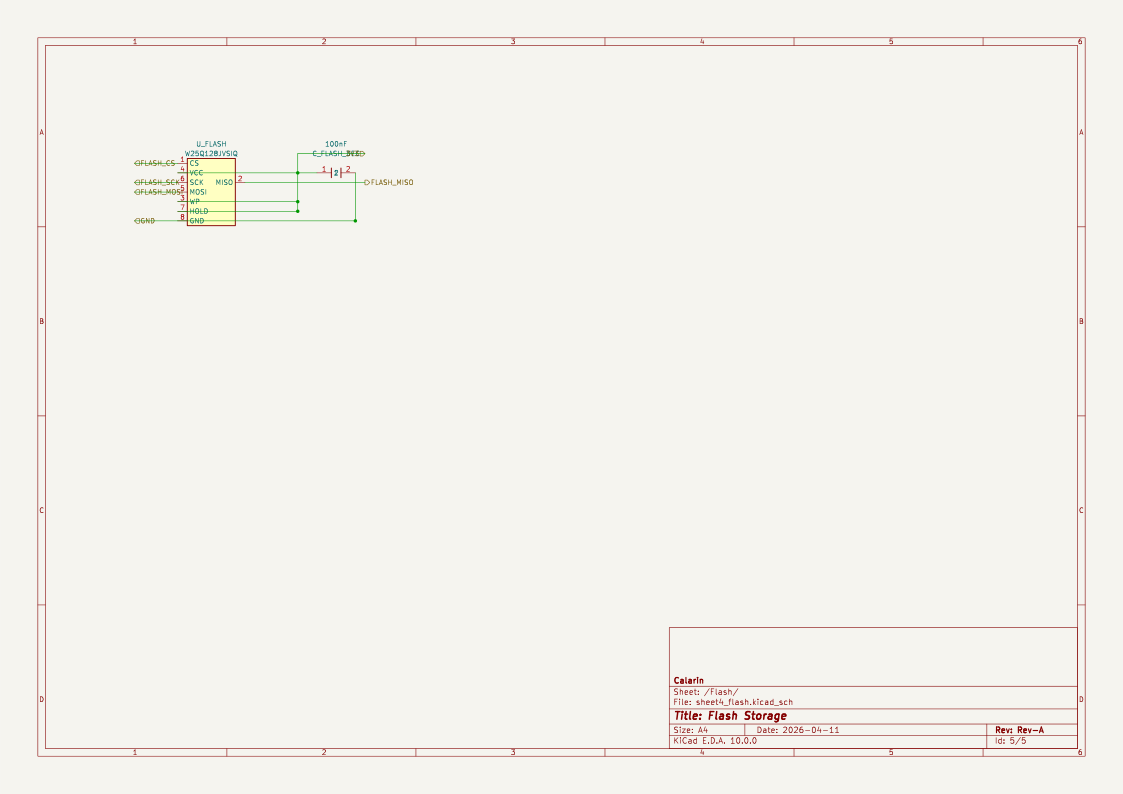
Flash sheet
These are pulled from the actual review pack. The KiCad verification result behind them is 0 ERC messages / 0 errors / 0 warnings.
Plan, battery logic, and raw review artifacts
Plan ready for review
# Calarin plan ready for review — 2026-04-12

## Executive summary
Calarin is now at a clean and honest review point.

What is done:
- live schematic verified from the Mini project
- KiCad project wrapper fixed (`calarin.kicad_pro`)
- ERC rerun successfully on the live synced project
- final ERC result: `0 messages / 0 errors / 0 warnings`
- review artifacts are durable on the Mini, not trapped in `/tmp`

What changed at the product level:
- old battery reasoning was partially based on misreading LiPo size codes
- we are no longer optimizing around a fake `3 mm battery box`
- product is now framed correctly as a MagSafe-backed recorder on the back of an iPhone
- the right trade is: spend footprint before spending thickness

## Recommended v1 product direction
### Shape
- flat vertical MagSafe slab
- more wallet-like than puck-like
- centered on the MagSafe zone on the back of the phone

### Battery direction
- primary target: `302540`
- stretch target: `302560`
- bring-up fallback: `402030`

### Geometry target for review
- outer envelope: about `56 x 86 x 9.5–10 mm`
- acceptable philosophy: slightly larger flat slab > smaller chunky block

## Why this is the right answer
- aligns with Nate’s clarified product intent
- keeps v1 workable without pretending it is final industrial design
- protects the phone-back product concept from being hijacked by a thick battery shortcut
- still leaves a clean fallback if sourcing slows down electronics work

## Buy recommendation
If buying only one battery class now:
- buy `302540`

If buying with schedule protection:
- buy `302540` for the real product direction
- buy `402030` as bring-up insurance

## Files prepared for review
In `/Users/nb/calarin-hardware/review-2026-04-12/` on the Mini:
- `FINAL-STATUS-2026-04-12.md`
- `REVIEW-NOTES.txt`
- `BATTERY-NOTES.txt`
- `BATTERY-DECISION-REFRAME-2026-04-12.md`
- `BATTERY-SHORTLIST-2026-04-12.md`
- `MAGSAFE-GEOMETRY-PLAN-2026-04-12.md`
- `erc-live-kicadpro.rpt`
- fresh SVG renders

## What I updated locally
- `/Users/nb/calarin-spec.md`
  - removed stale “ready to build” framing
  - replaced stale battery assumptions
  - reframed geometry around MagSafe-backed thin slab direction

## Review questions
1. Do we lock `302540` as the default v1 battery target?
2. Do we also buy `402030` as a pure bring-up hedge?
3. Does the `56 x 86 x 9.5–10 mm` envelope feel directionally right for v1?
4. Do we want to preserve a square puck branch at all, or kill it now?

## My recommendation
Lock all of this for v1 review:
- shape: MagSafe vertical slab
- battery: `302540`
- fallback: `402030`
- envelope: `56 x 86 x ~10 mm`

That is the current best balance of product truth, speed, and buildability.
Battery shortlist
# Calarin battery sourcing shortlist — 2026-04-12

## Goal
Pick a workable v1 battery direction for a MagSafe-mounted recorder that sits on the back of an iPhone.

User constraints now:
- attach to back of phone with MagSafe
- credit-card-ish / wallet-ish footprint is acceptable
- prioritize balance over perfection
- move quickly, but don’t lock in the wrong product shape

## Core conclusion
For this product, the right battery philosophy is:
- thin-and-long beats thick-and-compact
- area is cheaper than thickness
- a slightly larger flat slab on the back of the phone is better than a chunky bump

## Shortlist

### 1) Primary recommendation — 302540 class
Best current v1 direction.

Representative options:
1. 99Tech / Ecocell retail-style pack
   - class: `302540`
   - dimensions: about `3 x 25 x 40 mm`
   - capacity: `250 mAh`
   - connector: `JST-PH 2.0`, preattached
   - protection: yes
   - stock/price signal:
     - 99Tech: ~$6.95, 35 in stock
     - Ecocell: ~$6.95 inc GST, 379 in stock
   - notes:
     - turnkey and easy
     - normal-discharge battery, not high-rate
     - max charge current about `125 mA`
     - max discharge current about `250 mA`

2. LiPol Battery vendor-grade pack
   - model: `LP302540`
   - dimensions: `3.0 x 25.0 x 40.0 mm`
   - capacity: `260 mAh`
   - connector: none by default, 50 mm wires only
   - protection: yes
   - MOQ/lead time:
     - MOQ `5 pcs`
     - about `1 week` to ship if in stock
   - notes:
     - more flexible if we want custom connector or wire choice
     - less turnkey than the 99Tech/Ecocell route

Why it ranks #1:
- closest to the actual product goal
- thin enough to preserve the flat-back direction
- common enough to source without fully custom battery hell
- capacity is modest but acceptable for v1

Expected runtime at rough current assumptions:
- `250–260 mAh`
- around `7.1–8.7 hours` at `35–30 mA avg`

Verdict:
- best balanced v1 answer

---

### 2) Secondary recommendation — 302560 class
Good if we want more runtime by spending footprint instead of thickness.

Market signal:
- visible in search results and vendor catalogs
- not many clean retail turnkey listings with connector/protection already attached
- looks more like a vendor/custom-order class than a hobby-retail class

Expected shape:
- about `3 x 25 x 60 mm`
- around `300 mAh` class

Why it matters:
- very aligned with the MagSafe-back product concept
- buys runtime through area instead of chunkiness

Why it ranks #2 instead of #1:
- sourcing looks less clean
- the 60 mm length may be totally fine, but we should confirm comfort on the phone back before committing

Expected runtime:
- around `8.6–10 hours` at `35–30 mA avg`

Verdict:
- strong option if we want a flatter, more phone-accessory-like product and are okay with a little vendor wrangling

---

### 3) Interesting premium-thin option — 223439 class
Most interesting “actually thin” battery family found.

Representative vendor-style option:
- model: `LP223439`
- dimensions: about `2.5 x 34 x 44 mm`
- capacity: `250 mAh`
- protection: yes
- connector: vendor/customizable configuration available
- notes:
  - available from specialty LiPo vendors
  - more exotic than the 302540 retail packs

Why it matters:
- this is the most compelling “thin slab” geometry found so far
- could be excellent for a polished later rev

Why it is not the default v1 answer:
- more specialty-supplier flavored
- less obviously turnkey than 302540
- wider footprint may or may not feel better in the real industrial design

Expected runtime:
- around `7.1–8.3 hours`

Verdict:
- very interesting rev-B / premium-v1 path
- not the easiest first battery to bet on

---

### 4) Electrical bring-up fallback — 402030 class
Use only if we want the easiest possible sourcing and don’t want battery sourcing to slow electronics work.

Representative options:
1. PMD Way retail pack
   - class: `402030`
   - dimensions: about `3–4 x 20 x 30 mm` depending on listing / real pack thickness
   - capacity: `200 mAh`
   - connector: `JST-PH 2.0`, preattached
   - protection: yes
   - notes:
     - easy to buy
     - straightforward prototype battery

2. LiPol Battery vendor pack `LP402030`
   - dimensions: `4.0 x 20 x 30 mm`
   - capacity: `200 mAh`
   - connector: no connector by default, wires only
   - protection: yes
   - MOQ: `100 pcs` on one listing

Why it ranks below the thin options:
- shape is less aligned with a MagSafe-back product
- thickness is worse than the thin-cell direction
- runtime is also worse

Expected runtime:
- around `5.7–6.7 hours`

Verdict:
- okay for rapid electrical bring-up
- not the right product-shape battery if we already know the device belongs on the back of a phone

---

## Practical ranking for Calarin v1
1. `302540` — best balance, best starting point
2. `302560` — good if we want flatter + a bit more runtime and accept more sourcing friction
3. `223439` — most elegant thin-cell geometry, but slightly more exotic
4. `402030` — fallback only

## Recommendation
Lock this as the v1 direction:
- target battery family: `302540`
- stretch battery family: `302560`
- prototype fallback: `402030`

## Concrete next move
Use a two-lane plan:

### Lane A — product-shape truth
- source `302540` packs first
- confirm MagSafe-back footprint comfort
- model enclosure around a flat battery-first stack

### Lane B — don’t block electronics
- if 302540 sourcing gets annoying this week, buy a `402030` too
- use it only as a bring-up battery
- do not let it redefine the product shape

## My blunt call
If we buy only one class right now, buy `302540`.
That’s the cleanest v1 move.

If we want to hedge, buy both:
- `302540` for the actual product direction
- `402030` as a no-drama bring-up fallback
Prototype buy list
# Calarin prototype buy list — 2026-04-12

## Buying philosophy
Do not let battery sourcing stall the whole prototype.

Order in two lanes:
- Lane A = real product direction
- Lane B = schedule hedge for bring-up

## Lane A — real product-direction battery
### Primary battery target: 302540 retail pack
Recommended retail-style options:

1. Ecocell 302540 LiPo 250mAh
- URL: https://ecocell.com.au/product/lipo-250-302540/
- Price signal: ~$6.95 inc GST
- Stock signal: 379 in stock
- Geometry: 40 × 25 × 3 mm
- Connector: JST-PH 2.0 preattached
- Protection: yes
- Notes:
  - easiest clean 302540 candidate found
  - low-drama buy for immediate testing

2. 99Tech 302540 LiPo 250mAh
- URL: https://99tech.com.au/product/lipo-250-302540/
- Price signal: ~$6.95
- Stock signal: 35 in stock
- Geometry: 40 × 25 × 3 mm
- Connector: JST-PH 2.0 preattached
- Protection: yes

## Lane B — bring-up hedge battery
### Fallback battery: 402030 retail pack
1. PMD Way 402030 LiPo 200mAh
- URL: https://pmdway.com/products/lithium-ion-polymer-battery-3-7v-200mah-402030
- Price signal: £15 single, cheaper in 5x / 10x packs
- Geometry: 40 × 20 × 3 mm listed on page
- Connector: JST-PH 2.0 preattached
- Protection: yes

## My recommended exact move
Buy now:
1. Ecocell 302540 packs
2. PMD Way 402030 packs
3. core board parts
MagSafe geometry plan
# Calarin MagSafe geometry plan — 2026-04-12

## Planning basis
Use iPhone 15 Pro dimensions as the practical stand-in for review:
- phone body: `146.6 x 70.6 x 8.25 mm`
- MagSafe accessory ring reference commonly lands around:
  - outer diameter: `~56 mm`
  - inner opening: `~46 mm`

User intent:
- target future model behaviorally similar to iPhone Pro class
- attach to the back with MagSafe
- credit-card-ish footprint is acceptable
- v1 should be workable and iterated, not perfect

## Product-shape decision
Calarin should be a:
- flat vertical slab
- centered on the MagSafe zone
- visually more like a wallet / recorder badge than a square puck

This means:
- spend area before spending thickness
- battery should be oriented to preserve flatness
- `302540` is the right first geometry anchor

## Recommended v1 outer envelope
### Preferred envelope
- width: `55–58 mm`
- height: `80–90 mm`
- target total thickness: `9–10.5 mm` for a realistic v1

### Why this range
- narrow enough to sit comfortably on a Pro iPhone back
- tall enough to fit:
  - MagSafe attachment zone
  - battery-first internal stack
  - board / button / LED / mic routing
- feels closer to a wallet attachment than a random square block

### Harder but nicer stretch goal
- thickness: `<= 9 mm`

That probably requires:
- very disciplined stack layout
- very thin shell strategy
- avoiding accidental tall-component congestion

## Battery placement
### Primary battery orientation
- `302540` vertical orientation
- centered on the main body axis
- battery as the dominant flat component

That implies a battery footprint of roughly:
- `25 x 40 mm`
- with the `3 mm` axis contributing to thickness, not width/height

### Stretch battery orientation
- `302560` vertical orientation
- still viable if we decide we want more runtime and the extra height feels fine

### Fallback battery orientation
- `402030` centered as a bring-up battery only
- should not dictate final outer shape

## Rough stack logic
Current rough stack estimate:
- PCB: `~0.8 mm`
- ESP32-S3-WROOM module peak: `~3.1 mm`
- shell / adhesive / clearance / magnet stack budget: `~2–3 mm`
- battery thickness:
  - `302540`: `~3 mm`
  - `402030`: `~4 mm`

This means:
- truly matching naked-phone thickness is unrealistic for v1 unless layout gets unusually aggressive
- but a MagSafe accessory in the `9–10.5 mm` class is still coherent and product-plausible

## Layout recommendation
### Front / user-facing side
- button near upper-middle or upper-third
- LED ring integrated around button
- microphone port offset away from finger landing zone

### Internal mid-layer
- PCB shaped to avoid wasting area around MagSafe zone
- put tallest components where battery is not directly stacked if possible
- avoid stacking the thickest battery region directly under the tallest module region if the mechanical architecture can split them

### Rear / phone-facing side
- MagSafe magnetic structure centered to the phone axis
- soft-touch or thin protective rear surface to reduce wobble and keep the phone-contact side clean

## Camera / hand-feel guidance
- do not fight the camera bump by trying to occupy the entire phone back
- better to center Calarin below the top camera cluster and let it read like a wallet-height accessory
- preserve lower-half hand comfort over theoretical full-back coverage

## v1 geometry recommendation
If we want one clean geometry target for review, use:
- `56 mm` wide
- `86 mm` tall
- `~9.5–10 mm` realistic v1 thickness target
- internal battery target: `302540`

That is the best current balance of:
- phone-back comfort
- flatness
- battery realism
- prototyping simplicity

## ASCII sketch
Top-down back-of-phone concept (not to scale):

```text
+----------------------+
|  iPhone back         |
|  [camera bump]       |
|                      |
|      (MagSafe)       |
|    +------------+    |
|    |  Calarin   |    |
|    |  button    |    |
|    |   + LED    |    |
|    |            |    |
|    | 302540 batt|    |
|    |            |    |
|    +------------+    |
|                      |
+----------------------+
```

## Decision summary
Lock for review:
- geometry direction: vertical MagSafe slab
- preferred battery: `302540`
- stretch battery: `302560`
- fallback bring-up battery: `402030`
- target outer envelope for v1 review: `56 x 86 x ~9.5–10 mm`
Battery decision reframe
# Calarin battery decision reframe — 2026-04-12

## The key correction
The old battery discussion was anchored on a bad assumption.

We had been talking as if a `602530` cell meant roughly `60 x 25 x 3 mm`.
That is backwards.

For common LiPo size codes, the format is effectively:
- thickness x width x length

So:
- `402030` ≈ `4 x 20 x 30 mm`
- `502540` ≈ `5 x 25 x 40 mm`
- `602530` ≈ `6 x 25 x 30 mm`
- `702530` ≈ `7 x 25 x 30 mm`

This matters because the prior “3 mm battery target” was partly based on reading these codes upside down.

## Updated product goal from Nate
The real goal is not “battery must be <= 3 mm.”
The real goal is:
- final product should be about as thin as an iPhone, ideally `<= 8.5 mm` overall
- device footprint can grow on the back of the phone if it stays comfortable
- speed matters, but not at the cost of lying to ourselves

That is a much healthier constraint.

## What we are deciding now
We are deciding battery shape and capacity based on:
1. total assembled thickness
2. acceptable footprint on the back of the phone
3. runtime target
4. sourcing simplicity

We are NOT deciding whether to preserve an old 3 mm battery myth.

## Rough stack budget
Very rough non-battery stack estimate for current Rev-A architecture:
- PCB: ~0.8 mm
- ESP32-S3-WROOM module height: ~3.1 mm
- additional connector / placement / clearance budget: ~0.8 mm
- enclosure walls / tolerance / adhesive budget: ~1.0 mm

Estimated non-battery stack: ~5.7 mm

That means approximate total thicknesses land around:
- `402030` (4 mm cell) -> ~9.7 mm total
- `502540` (5 mm cell) -> ~10.7 mm total
- `503035` (5 mm cell) -> ~10.7 mm total
- `602530` (6 mm cell) -> ~11.7 mm total
- `702530` (7 mm cell) -> ~12.7 mm total

These are not precision-CAD numbers, but they are good enough to kill bad assumptions.

## Runtime math using current power assumptions
Using the existing rough recording draw assumptions:
- at `30 mA` average:
  - `200 mAh` -> ~6.7 h
  - `400 mAh` -> ~13.3 h
  - `500 mAh` -> ~16.7 h
- at `35 mA` average:
  - `200 mAh` -> ~5.7 h
  - `400 mAh` -> ~11.4 h
  - `500 mAh` -> ~14.3 h

So the practical battery classes are:
- `402030` if we want the thinnest plausible prototype and can tolerate shorter runtime
- `400–500 mAh` classes if we want healthier runtime and can tolerate ~10.5–11 mm total thickness unless we redesign the stack

## Candidate battery classes
### 1. 402030 class
Typical real-world dimensions:
- about `30.5 x 20 x 4 mm`
- protected versions with JST-PH are easy to find
- around `200 mAh`

Pros:
- easiest to source
- smallest / lightest
- best for fastest bring-up

Cons:
- likely only ~6–7 h realistic runtime at current assumptions
- still probably too thick to hit an honest `<= 8.5 mm` total device without aggressive stack work

### 2. 502540 class
Typical class:
- about `5 x 25 x 40 mm`
- around `350–500 mAh`
- protected/JST variants exist, though listings are messier

Pros:
- much better runtime than 402030
- footprint is still reasonable on the back of a phone
- probably a better balance if footprint is allowed to grow

Cons:
- almost certainly not iPhone-thin with current board/module stack
- likely a ~10.5 mm class product unless we redesign layout and enclosure aggressively

### 3. 503035 class
Typical class:
- about `5 x 30 x 35 mm`
- around `500 mAh`
- protected/JST variants are common enough

Pros:
- strong runtime
- compact enough to still feel like a back-of-phone accessory

Cons:
- same thickness problem as 502540
- more “small puck” than “thin slab”

### 4. True thin-and-long cells (`302540`, `302560`, similar)
Typical class:
- around `3 x 25 x 40 mm`
- around `250–300 mAh`
- some listings exist, but protected JST-equipped versions are less clean / less standard

Pros:
- this is the shape family that actually aligns with the original thin-product intent
- much more compatible with an iPhone-thin overall package
- footprint tradeoff is exactly what Nate said he is okay with

Cons:
- sourcing is less turnkey
- may require custom connector/protection choice instead of easy off-the-shelf convenience
- lower capacity than 5–6 mm thick cells

## Real candidate families worth chasing now
### A. 302540 class
Observed market shape:
- about `3 x 25 x 40 mm`
- around `240–300 mAh`
- examples exist with JST-PH and protection

Why it matters:
- this is the cleanest fit for the new product goal
- much better than pretending `602530` was a 3 mm thin cell

### B. 302560 class
Observed market shape:
- about `3 x 25 x 60 mm`
- around `300 mAh`
- fewer clean turnkey listings, but the geometry is exactly the kind of trade Nate said is acceptable

Why it matters:
- maximizes thinness while buying more runtime through area instead of thickness
- likely one of the best product-shape candidates if the footprint still feels good on the back of the phone

### C. 223439 ultra-thin class
Observed market shape:
- about `2.5 x 34 x 44 mm`
- around `250 mAh`
- available with PCM / wires from specialty LiPo vendors

Why it matters:
- this is the most interesting “actually iPhone-thin-ish” battery family found so far
- wider footprint, but very credible for a thin slab product

### D. 402030 fallback
Observed market shape:
- about `4 x 20 x 30 mm`
- around `200 mAh`
- easy to source with JST and protection

Why it matters:
- best fallback for rapid electrical bring-up
- not the best final product battery if thinness is the actual north star

## Recommendation
If the north star is truly “about as thin as an iPhone,” then the best product direction is:

### Recommended path: prioritize a thin-and-long battery, not a thick compact one
Meaning:
- stop optimizing for tiny footprint
- optimize for total thickness
- allow a larger footprint on the back of the phone
- shortlist `302540`, `302560`, and `223439` style cells first

### Practical fallback path
If sourcing a thin protected JST battery is annoying and we want electronics bring-up sooner:
- use `402030` as the bring-up battery
- but treat it as an electrical prototype battery, not final product truth

## Decision I would make
Two-phase approach:
1. Product truth:
   - redesign the battery requirement around whole-device thickness and start targeting thin, area-heavy cells (`302540`, `302560`, `223439` families)
2. Prototype momentum:
   - if we want bring-up before that sourcing is fully closed, allow a `402030` electrical prototype battery temporarily

That gives us both:
- honest product direction
- fast learning loop

## Bottom line
The product decision is now:
- Do we optimize around total device thickness with a wider/longer battery footprint? -> yes, that matches Nate’s clarified goal.

So the next concrete battery search should focus on:
- thin `2.5–3 mm` class LiPo cells
- comfortable back-of-phone footprint
- protection/connector strategy as a secondary constraint, not the primary product driver
Final status
# Calarin Rev-A status — 2026-04-12

## Verified now
- Live KiCad tree source: `/Users/nb/calarin-hardware/kicad` on the Mini.
- Synced to Studio and rechecked with KiCad 10 CLI.
- Added missing project wrapper file: `calarin.kicad_pro`.
- Result with project context present: `0 ERC messages / 0 errors / 0 warnings`.

## Important truth boundary
What is done:
- Multi-sheet schematic is reviewable.
- ERC is clean.
- Local project packaging is present for custom symbols and microphone footprint:
  - `Calarin.kicad_sym`
  - `sym-lib-table`
  - `fp-lib-table`
  - `Calarin.pretty/MEMS_MSM261DGT003_LGA-6_4x2mm.kicad_mod`
- The previous false-positive library warnings were a project-context issue, not an electrical issue.

What is not done:
- Final battery SKU is not solved.
- Mechanical closure is not solved.
- It is still not honest to say “order everything.”

## Ordering split
Safe to buy now:
- ESP32-S3-WROOM-1U-N16R8
- MSM261DGT003
- W25Q128JVSIQ
- ME6210A33M3G
- WS2812B-V5
- IP5306-I2C
- passives / headers / USB-C / switch parts already represented in schematic

Prototype-only option:
- 402030-class protected JST-PH LiPo (~200mAh, ~30 x 20 x 3.6–3.9 mm)
- Accepts thickness violation versus the frozen `<=35 x 25 x 3 mm` target

Still blocked:
- Final mechanically compliant battery SKU
- Final enclosure/clip/battery stack closure
- Unqualified full Rev-A order approval

## Decision fork
Option A:
- Keep the `<=35 x 25 x 3 mm` envelope strict.
- Battery remains blocked.

Option B:
- Use a 402030-class cell for prototype bring-up only.
- Keep final battery/mechanical signoff explicitly blocked.
ERC report
ERC report (2026-04-12T11:45:37, Encoding UTF8)
Report includes: Errors, Warnings

***** Sheet /

***** Sheet /Power/

***** Sheet /PDM Microphone/

***** Sheet /Controller/

***** Sheet /Flash/

 ** ERC messages: 0  Errors 0  Warnings 0

 ** Ignored checks:
    - Global label only appears once in the schematic
    - Four connection points are joined together
    - SPICE model issue
    - Assigned footprint doesn't match footprint filters